Solar PV Fire Safety in Nigeria: Causes, Warning Signs and What Property Owners Should Know
Solar PV fire safety matters for every property with panels, an inverter or batteries. Learn the common fire causes, warning signs, battery hazards, emergency steps, inspection and repair costs, and how to protect your home or business.
- Favour Otaigbe
- 18 min read
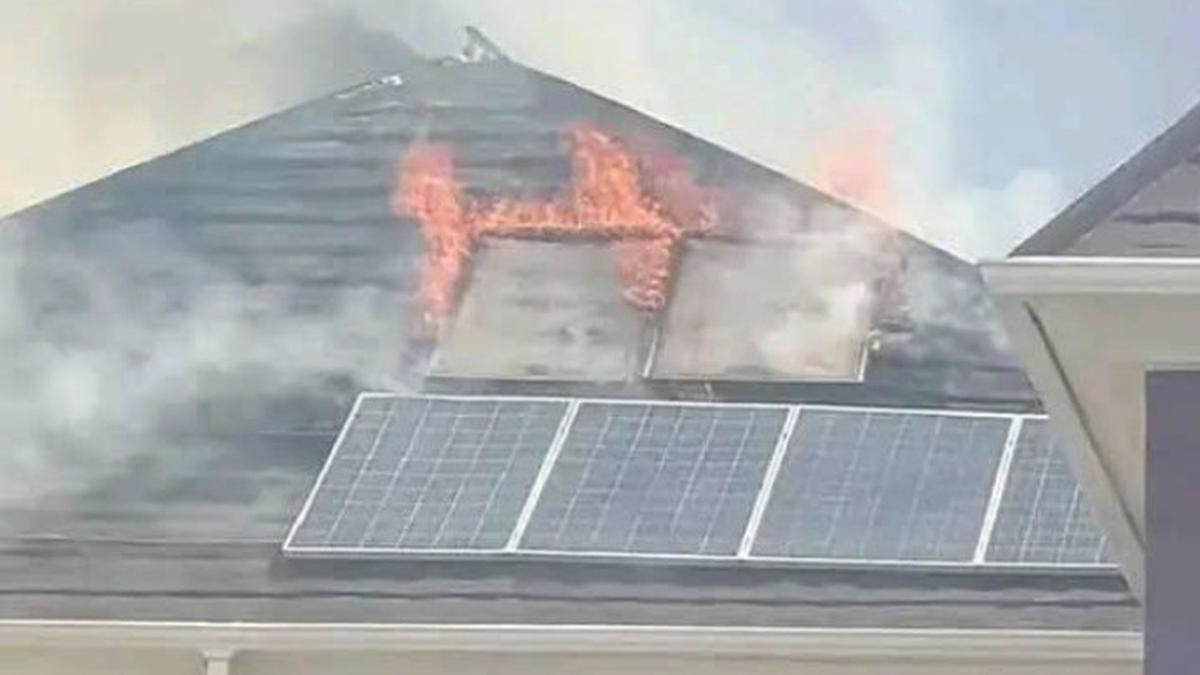
Solar power has become an important source of electricity for homes, businesses and institutions across Nigeria. Rooftop panels, inverters and battery storage help people manage unreliable grid supply and reduce their dependence on generators. However, like other electrical installations, solar systems need proper care. A fault in the wrong place can cause overheating, electrical arcing or, in serious cases, a fire.
Solar PV fire safety is not something property owners should ignore simply because their systems appear to be working normally. Some faults develop inside electrical enclosures, behind panels or around cable connections, where they may not be immediately visible.
There have been several reported incidents involving solar equipment in Nigeria. In January 2026, the Federal Fire Service reported a residential fire at Suncity Estate, Galadima, Abuja, which it attributed to a lithium solar inverter system. In June, the Oyo State Fire Services Agency attributed a fire in Ogbomoso to an overloaded solar installation, based on its preliminary findings. In September, the Kwara State Fire Service reported that a preliminary investigation into a fire in Ilorin pointed to a spark from solar wiring. In November, the Oyo State agency reported preliminary findings of overheating involving a solar panel system in a house in Awe. The Federal Fire Service's Taraba Command also reported that a solar inverter was suspected in a residential fire in Jalingo.
These reports are useful reminders, but they should be read carefully. They describe different incidents and different suspected sources. A preliminary finding is not the same as a completed technical investigation, and these reports do not establish how frequently solar systems cause fires across Nigeria.
It is also important to understand that not every fire in a building with solar panels starts in the solar system. An ordinary electrical fault elsewhere in a building can start a fire that later reaches the roof or solar equipment.
A properly designed, installed and maintained solar system should not introduce an unreasonable fire risk. The answer is not to be afraid of solar power, but to understand the possible hazards and take warning signs seriously.
How Can a Solar Installation Cause a Fire?
A solar system is made up of several connected parts. These may include rooftop panels, cables, switches, protective devices, an inverter, batteries and connections to the building's electrical supply. A problem in any of these areas can create a safety risk.
The following are some of the issues property owners should understand.
Loose or damaged electrical connections
A loose or poorly made connection can create resistance and generate heat. If the problem continues, the connection may overheat, damage nearby insulation or produce electrical arcing. An electrical arc can become hot enough to ignite surrounding material.
The danger is that some poor connections are hidden inside enclosures or behind equipment. A system may continue supplying electricity even when a fault is developing.
Damaged or unsuitable cables
Solar cables may be exposed to strong sunlight, rain, heat, dust, rodents and mechanical damage. Poorly protected cables can deteriorate, become exposed or suffer damage where they pass through walls, ceilings or roof spaces.
Cracked insulation, exposed conductors and cables resting against sharp edges should not be ignored.
Faulty switches, connectors or protective equipment
A damaged or poorly installed isolator, connector, fuse holder or other electrical component can overheat. Moisture entering an enclosure that is not suitable for its location can also contribute to electrical faults.
Protective devices are important, but their presence alone does not prove that an installation is safe. They must be suitable for the equipment and correctly installed.
Inverter faults and overheating
The inverter handles electrical power from the panels and batteries. Like other electrical equipment, it can develop internal faults or suffer from poor connections, unsuitable installation conditions, dust or inadequate ventilation.
Some warmth during normal operation is not automatically a sign of danger. However, excessive heat, burning smells, repeated temperature warnings or visible damage deserve prompt attention.
Overloaded or poorly maintained systems
An installation may become unsuitable when additional appliances, batteries or panels are added without checking whether the existing equipment and wiring can accommodate the changes.
The problem is not simply the number of appliances. The inverter, battery, cables, protective equipment and building wiring must all be suitable for the system's actual operating conditions.
Damaged solar panels and roof components
Cracked panels, damaged junction boxes, loose mounting parts and deteriorated cable connections can introduce electrical or physical hazards. A damaged panel does not automatically mean a fire will occur, but it should be assessed rather than ignored.
Weather, water and environmental exposure
Heavy rain, humidity, strong sunlight, dust, lightning and rodents can place additional demands on an installation, particularly where equipment or cable routes are poorly protected.
Rain alone does not mean a solar system will catch fire. The concern is water entering damaged or unsuitable equipment, corrosion, deteriorating insulation or another fault that develops over time.
In Nigeria, these conditions make the condition and location of outdoor equipment especially important. A system that has been exposed to flooding, a severe storm or roof damage should be checked before being put back into normal use.
Can Solar Batteries Catch Fire or Explode?
Yes. Battery storage is one of the reasons solar fire safety deserves attention, particularly in buildings using lithium-ion batteries.
Lithium-ion batteries store a large amount of energy. If a cell develops a serious internal fault, is damaged, overheats or is exposed to unsuitable charging conditions, it may experience a process known as thermal runaway. This is a chain reaction in which the battery generates heat faster than it can safely release it. It can lead to smoke, the release of flammable gases, fire and, in some circumstances, an explosion.
Battery management systems help monitor and protect batteries, but they should not be treated as a guarantee that a battery can never fail.
Are lithium iron phosphate (LFP) batteries completely safe?
No battery chemistry should be described as fireproof. Lithium iron phosphate (LFP) batteries generally have better thermal stability than some other lithium-ion chemistries, including nickel manganese cobalt (NMC). That can reduce the likelihood of thermal runaway, but it does not eliminate the risk.
The quality of the battery, its condition, protection systems, installation environment and how it is used all matter.
What should property owners watch for?
Pay attention to:
A battery that becomes unusually hot.
Swelling, bulging, cracks or visible damage.
A strong or unusual chemical smell.
Hissing, popping or crackling sounds.
Smoke, vapour or leakage.
Repeated battery alarms or unexplained shutdowns.
Do not open the battery casing, attempt to repair cells or restart a battery that has been damaged by impact, flooding, fire or severe overheating. Have it assessed by an appropriately qualified professional and follow the manufacturer's instructions.
Battery equipment should be kept in a suitable location that follows the manufacturer's ventilation, temperature, access and clearance requirements. Avoid storing paper, cartons, fuel, chemicals or other combustible materials around the equipment.
For further information, see Fire and Rescue NSW's residential battery safety guidance.
Warning Signs of an Unsafe Solar Installation
A solar system does not always give a clear warning before a serious fault develops. However, there are signs that property owners, occupants and facility managers should take seriously.
Warning sign | Why it matters | What to do |
|---|---|---|
Burning plastic or electrical smell | May indicate overheating insulation, a connection or electrical component | Keep away from the affected equipment and arrange urgent professional attention |
Smoke, sparks or visible flames | May indicate an active electrical or battery fire | Raise the alarm, evacuate and call emergency services |
Unusually hot inverter or battery | May indicate abnormal heating or a developing fault | Do not touch or open it; arrange an urgent assessment |
Crackling, buzzing or popping sounds | May indicate an electrical fault or battery problem | Keep away and have the system checked |
Melted, darkened or cracked cables | May indicate overheating or physical deterioration | Do not handle the cable; have the affected circuit assessed |
Repeated inverter or battery alarms | May indicate a fault that needs attention | Record the warning and contact a qualified technician |
Swollen, leaking or damaged battery | May indicate a serious battery fault | Do not use or restart it; keep people away and seek professional advice |
Water around electrical equipment | May indicate water ingress or a damaged enclosure | Avoid the equipment and arrange an inspection |
Do not dismiss repeated fault warnings
A single warning message may have several possible explanations, but repeated alarms, unexpected shutdowns or a sudden change in system behaviour should not become normalised.
Keep a record of warning messages and when they occur. A photograph of the display can help a technician understand the problem, provided you can take it without approaching damaged or overheating equipment.
What about a solar system that still works?
A system can continue supplying electricity while a fault is developing. Normal operation does not prove that cables, connectors, switches, batteries and other components are in good condition.
Do not wait for the inverter to stop working before arranging an inspection when there are signs of overheating, damage or repeated faults.
What Should You Do If Your Solar System Starts Smoking or Burning?
A fire involving solar panels, inverters or battery storage can present electrical and smoke hazards. Your first responsibility is to protect people, not save the equipment.
If you notice smoke, sparks or flames
Raise the alarm and evacuate. Warn everyone in the building and move to a safe location.
Call emergency services. In Nigeria, dial 112.
Tell responders that the building has solar panels and battery storage. Explain where the inverter, batteries and other equipment are located, if you know.
Keep everyone away. Do not touch cables, damaged panels, inverters or batteries. Do not climb onto the roof or enter a room filled with smoke.
Do not attempt to fight a battery or electrical-equipment fire unless you are trained, have the appropriate equipment and can act without putting yourself at risk. Do not delay evacuation to search for a switch or extinguisher.
Does switching off the inverter make the solar panels safe?
Not necessarily. Solar panels exposed to daylight can continue generating electricity, and the cables between the panels and inverter may remain energised even after the inverter or building's main AC supply has been switched off. A battery can also retain stored electrical energy.
This is why occupants should never assume that switching off one control makes the entire system safe. Firefighters and qualified technicians need to consider the system's different power sources and isolation points.
Can I restart the system after a fire or serious fault?
No. Do not restart equipment that has been exposed to fire, smoke, flooding or serious overheating until it has been properly assessed and cleared by a qualified professional. A damaged battery can remain hazardous even when visible flames or smoke have stopped.
Make sure the people responsible for your building know that solar panels and battery storage are present. Keep relevant equipment details and system documentation accessible for emergency responders.
Solar System Inspection and Maintenance: What Property Owners Should Do
Routine attention can help identify developing problems before they become more serious. You do not need to dismantle equipment or carry out electrical tests yourself. Your role is to notice changes, keep the area safe and arrange professional attention when necessary.
What you can check without touching electrical equipment
From a safe position, look for:
Visible cable damage, loose hanging wires or exposed conductors.
Water leaks, signs of flooding or moisture around equipment.
Burn marks, discolouration or damaged enclosures.
Physical damage to panels or mounting structures.
Boxes, cartons, fuel or other combustible items stored close to inverter or battery equipment.
Repeated inverter or battery warning messages.
Unusual noise, smell or heat coming from the equipment.
Do not climb onto the roof to inspect panels or walk across them. Roof work and electrical inspection should be handled by people with the right competence and safety arrangements.
When should you arrange a professional inspection?
Arrange an assessment when:
The system repeatedly displays fault messages or shuts down unexpectedly.
The inverter, battery or electrical connections show signs of abnormal heating.
You notice damaged cables, connectors or equipment enclosures.
The building or equipment has been affected by flooding, lightning, a severe storm or roof damage.
You have added more panels, batteries or major appliances to an existing installation.
The system has not been checked for a long time, or you have inherited a property with an existing solar system.
A repair has been completed and you need confirmation that the affected system is safe to return to service.
There is no single inspection interval that applies to every solar system. Follow the equipment manufacturer's maintenance instructions and ask a qualified professional to recommend an inspection schedule based on the system, its condition, environment and use.
What should a professional inspection provide?
You should expect the person carrying out the work to explain what was checked, identify any visible defects or safety concerns, distinguish urgent problems from routine maintenance needs, and provide a written summary of recommended repairs.
For larger commercial or institutional systems, keep inspection reports, equipment details, repair records and relevant system diagrams together. These records can help with future maintenance, insurance discussions and emergency planning.
For electrical faults or an existing system that needs attention, see BrightForge's Electrical Repairs & Maintenance service.
What Should You Look for When Hiring an Electrician to Inspect or Repair a Solar System?
A solar fault is not a good opportunity to gamble on the cheapest person available. The person you engage should understand the type of solar system installed and be appropriately qualified for the work they are being asked to carry out.
Before agreeing to a job, consider the following:
Ask about relevant competence and certification. NEMSA's certification scheme includes renewable-energy installation work, including solar PV systems and inverter and battery storage systems. Ask to see the relevant competency certificate and verify credentials through NEMSA's official website.
Explain the symptoms clearly. Tell the electrician about alarms, smells, unexpected shutdowns, previous repairs and any recent changes to the system.
Ask for a proper assessment. A professional should investigate the reported fault rather than immediately recommend replacing the entire system without explaining why.
Request an itemised quotation. It should identify the proposed work, replacement components, labour and any additional charges.
Ask about compatible replacement parts. Components should be suitable for the system and consistent with relevant manufacturer requirements.
Get a record of the work. Keep the inspection findings, repair details, equipment information and any updated operating instructions.
Be cautious of anyone who proposes bypassing a protective device, joining damaged cables as a permanent fix, ignoring repeated alarms or replacing equipment without explaining the fault.
A note for electricians and solar installers
Do not ignore loose connections, unsuitable connectors, damaged cable insulation, poor equipment ventilation or signs of moisture ingress. Do not leave a customer with unresolved warnings or undocumented changes to the system. A repair should address the underlying problem, not simply make the alarm disappear.
NEMSA describes its statutory role as including technical inspection, testing and certification of electrical installations and competent electrical personnel. Its renewable-energy certification scheme specifically includes solar PV and inverter/battery storage work. The exact inspection or certification process applicable to a particular project should be confirmed with NEMSA rather than assumed.
Nigeria is also reviewing its solar and lithium-battery safety framework. On 23 October 2026, the Federal Government announced the inauguration of an inter-agency committee tasked with reviewing existing standards and recommending safety requirements. That announcement describes work the committee has been asked to undertake; it should not be mistaken for a completed new regulation.
See NEMSA's mandate, its renewable-energy contractor certification scheme and the Federal Government's announcement.
How Much Does Solar System Inspection or Repair Cost in Nigeria?
The cost of inspecting or repairing a solar installation depends on what is wrong and what needs to be done. There is no single price that can honestly cover every home, office, shop, hotel, school or commercial property.
A straightforward assessment of an accessible inverter installation is different from diagnosing a fault involving rooftop cables, several battery units, damaged equipment or a large commercial system.
The final cost may depend on:
The size and configuration of the existing system.
The number and type of panels, inverters and batteries.
Whether the fault is easy to access or requires roof work.
Whether the job involves inspection only, fault diagnosis, repairs or replacement.
The cost and availability of compatible replacement components.
The labour, transport and additional work required at the property.
What should a repair quotation include?
Ask for a clear breakdown of:
Cost item | What it should explain |
|---|---|
Inspection or call-out | Whether there is a charge for visiting and assessing the property |
Fault diagnosis | The work required to identify the problem |
Replacement components | The specific part, model and quantity being supplied |
Labour | The work involved in carrying out the repair |
Additional work | Any cable replacement, roof access or related electrical repairs |
Testing and handover | What checks and documentation will be provided after the repair |
Do not approve a full inverter, battery or panel replacement simply because the system has stopped working. Ask for the fault to be explained and for the proposed replacement to be justified. Also check whether the affected component is still covered by a manufacturer or installer warranty before paying for a replacement.
Does solar maintenance cost less than repairing fire damage?
Preventive inspections and timely repairs can help identify problems before they develop into major damage. They cannot guarantee that a fire will never occur, but ignoring clear signs of a fault is an unnecessary risk to the property and the people using it.
For an existing installation in Benin City, you can discuss the condition of the system and request a quotation through BrightForge's Solar Installation service or quote form. The scope and price should be based on the actual system and the work required.
Solar Fire Safety for Businesses, Schools and Other Institutions
Solar installations in commercial and institutional properties may serve more than one building area or support important equipment. A fire or system failure can therefore affect staff, customers, residents, students, patients, visitors and business operations.
Business owners, facility managers and administrators should make solar safety part of their wider property safety arrangements.
Practical measures for buildings with solar equipment
Keep the inverter and battery area free from unnecessary storage, cartons, fuel and other combustible materials.
Make sure equipment areas are accessible to authorised maintenance personnel without being used as general storage rooms.
Keep system manuals, equipment details, emergency shutdown information and maintenance records in a known location.
Make sure relevant staff know that the building has rooftop solar panels and battery storage.
Clearly identify the location of the inverter, battery bank and relevant isolation points for emergency responders.
Record repeated system alarms, shutdowns, repairs and equipment replacements.
Arrange professional assessments after major storms, flooding, roof work, system modifications or repeated faults.
Make sure the property's fire safety and emergency arrangements account for the presence of solar panels and batteries.
What about hospitals, hotels, schools and larger facilities?
Buildings that depend on solar power for security systems, lighting, refrigeration, communications, medical support or business continuity should pay particular attention to maintenance records and emergency arrangements.
Do not assume that a system is safe simply because it is operating every day. The person responsible for the property should know who maintains it, where its components are located and how to contact the appropriate service provider.
Should solar equipment be covered by insurance?
Speak to your insurer and disclose the solar installation and any significant changes to it. Ask whether the policy covers rooftop panels, inverters, batteries and related equipment against fire, lightning, power surges, theft or other relevant events. Do not assume every policy covers every type of equipment or every cause of damage.
Keep purchase records, equipment serial numbers, installation documents, inspection reports and repair receipts. These may be useful when discussing a claim, subject to the policy's conditions.
Frequently Asked Questions About Solar PV Fire Safety
Can solar panels cause a fire in my house or business?
Yes, a fault involving solar equipment or its electrical connections can contribute to a fire. Possible problems include damaged cables, poor connections, faulty components and overheating. However, a fire in a building with solar panels does not automatically mean the solar panels caused it. The actual source needs to be established.
Can a solar inverter catch fire?
Yes. An inverter is electrical equipment and can develop faults, overheat or suffer damage. Warning signs include repeated temperature alarms, burning smells, unusual noises, visible damage or smoke. Do not open the inverter or attempt internal repairs yourself.
Can a lithium solar battery explode?
A severely faulty or damaged lithium-ion battery can undergo thermal runaway, which may involve intense heat, flammable gases, smoke, fire and, in some circumstances, an explosion. A battery that is swollen, leaking, unusually hot or producing vapour should be treated as dangerous.
Is an LFP battery completely fireproof?
No. LFP batteries generally have better thermal stability than some other lithium-ion battery chemistries, but they can still fail and catch fire under certain conditions. Battery quality, condition, protection systems and installation environment all matter.
Can solar panels still produce electricity after the inverter is switched off?
Yes. Panels exposed to daylight can continue generating electricity. Depending on the system design, the cables between the panels and inverter may remain energised even when the inverter is switched off. Do not touch solar cables or assume the system is electrically safe.
Is it safe to leave my solar system running overnight or when nobody is home?
A properly installed and maintained system is designed to operate without constant supervision. However, no electrical system is completely free of risk. Keep the equipment in suitable condition, respond to warning messages and arrange professional attention when faults appear. Follow the manufacturer's instructions for normal operation and shutdown.
How often should a solar system be inspected?
There is no single interval that applies to every installation. Follow the manufacturer's maintenance instructions and consider the system's age, condition, location and operating environment. Arrange an inspection after damage, flooding, major modifications or repeated warning messages.
What should I do if my solar inverter starts smoking?
Keep away from the inverter, warn everyone in the building, evacuate and call emergency services. Do not open the equipment, touch its cables or attempt to move it. Tell responders that the building has a solar installation and battery storage, if present.
How much does solar system inspection or repair cost in Nigeria?
The cost depends on the system size, the type of fault, site access, labour and whether replacement components are required. Request an assessment and an itemised quotation before approving work. Avoid accepting a major replacement recommendation without an explanation of the fault.
Should I inspect a solar system when buying or taking over a property?
Yes. An existing installation may have an unknown maintenance history, previous modifications or defects that are not immediately visible. Arrange an assessment by a suitably qualified professional before relying on the system, particularly if you cannot obtain its installation and maintenance records.
Can I use my normal building electrician to repair a solar inverter or battery?
Not automatically. Solar systems have equipment and safety considerations that require relevant competence. Ask whether the person has experience and appropriate qualifications for the particular inverter, battery and PV system involved. For internal battery or inverter faults, follow the manufacturer's service requirements.
Does insurance cover damage caused by a solar installation?
That depends on the policy. Speak to your insurer and ask specifically about solar panels, inverters, batteries, fire damage and any exclusions. Keep your installation records, equipment details, receipts and maintenance history.
Protect Your Property by Taking Solar Safety Seriously
Solar power remains a practical option for Nigerian homes, businesses and institutions. The answer is not to be afraid of every solar panel or inverter. It is to recognise that these are electrical and energy-storage systems that need proper attention.
Watch for unusual heat, burning smells, damaged cables, battery swelling, repeated alarms and unexplained shutdowns. Do not attempt to repair electrical equipment or handle a damaged battery yourself. Arrange professional inspection when something does not look or sound right, and make sure everyone responsible for the property knows what to do in an emergency.
For businesses and institutions, good records, clear emergency information and planned maintenance are just as important as keeping the system operational.
Need Help With an Existing Solar Installation?
BrightForge Electrical & Security Ltd provides solar and electrical services for homes and businesses in Benin City, Edo State. We can discuss your system, understand the problem and help you determine the appropriate next step.
Request an assessment or repair quotation: Contact BrightForge or call 0811 353 9650.
BrightForge Electrical & Security Ltd — Smart Solutions. Lasting Impact.
For electricians and solar installers: There is a separate technical side to solar fire prevention, fault diagnosis and installation practices. We'll explore those subjects in a dedicated professional article. Look out for our upcoming post.
Need help with this at your property?
Tell us what you need and we'll get back to you during business hours. (Monday–Saturday, 8:00 AM–6:00 PM)