
Why Does Your Circuit Breaker Keep Tripping? Causes and What to Do
Does your circuit breaker keep switching off? Learn the common causes, what you should do safely, and when to call a qualified electrician.
- BrightForge Editorial Team
- 4 min read
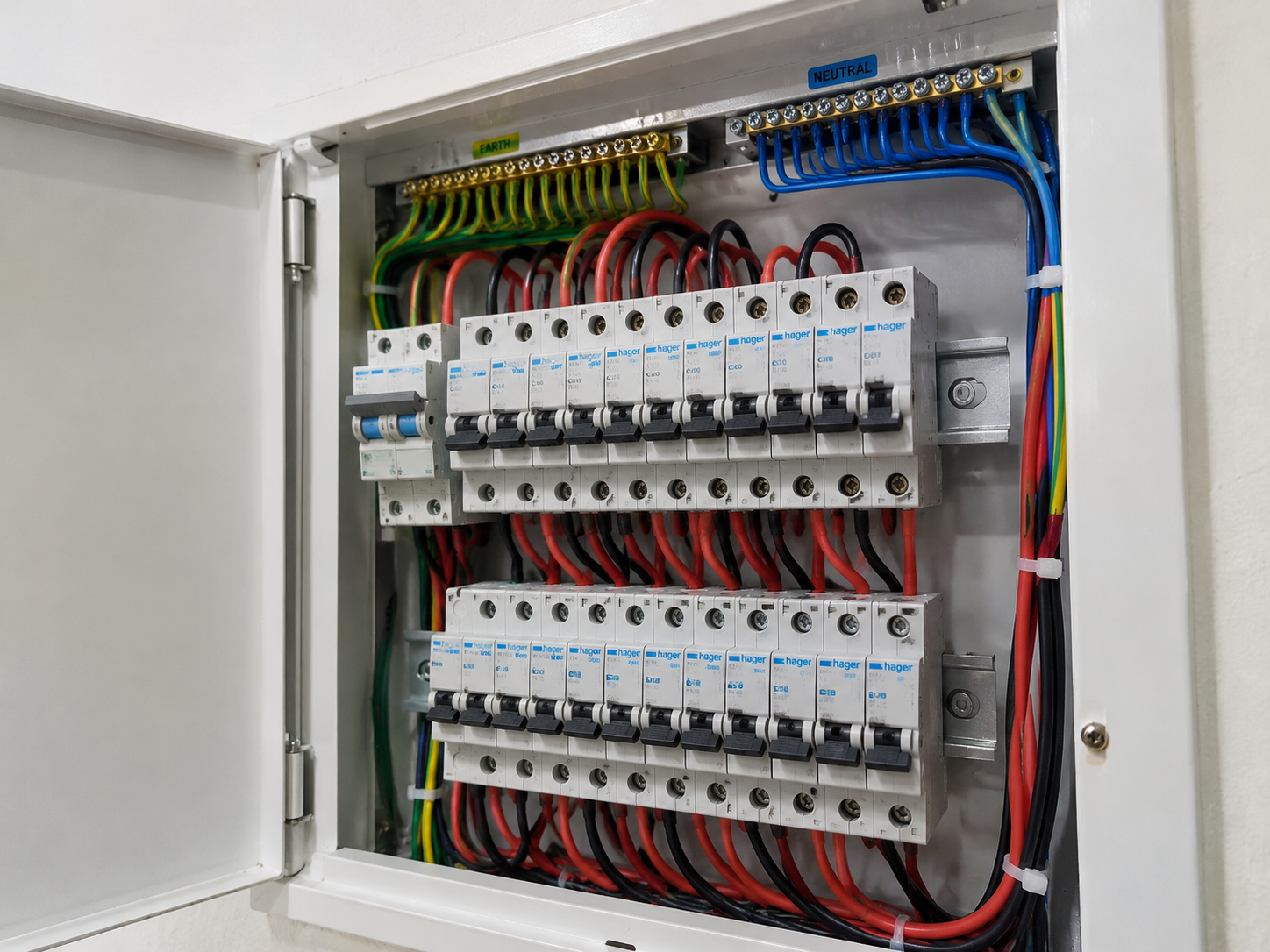
A circuit breaker that keeps switching off can be frustrating, especially when it interrupts your lighting, appliances or other electrical equipment. However, a breaker that trips repeatedly may be warning you about a problem that needs attention.
Circuit breakers are safety devices designed to interrupt the flow of electricity when they detect certain unsafe conditions. Instead of repeatedly switching the breaker back on, it's important to understand what might be causing the problem.
Common Reasons Your Circuit Breaker Keeps Tripping
1. Circuit Overload
An overload happens when too many appliances or electrical devices draw more current than a circuit is designed to handle. This may happen when several high-power appliances operate on the same circuit.
What to do: Switch off and unplug non-essential appliances if it is safe to do so. If the breaker continues to trip during normal use, arrange for an electrician to inspect the circuit and assess whether the electrical installation is suitable for the load.
2. A Short Circuit
A short circuit occurs when electricity takes an unintended path with very low resistance. It can cause a breaker to trip suddenly and may be associated with damaged wiring, faulty equipment or other electrical faults.
What to do: Stop using the affected circuit or appliance. Do not open sockets, expose wires or attempt to locate a fault inside the distribution board yourself. Arrange for a qualified electrician to investigate.
3. An Earth Leakage Fault
An earth leakage fault occurs when electrical current escapes its intended path. Depending on the installation, an RCD or RCBO may disconnect the supply to reduce the risk of electric shock.
What to do: Do not bypass or disable the protective device. A qualified electrician can identify the source of the leakage and check the effectiveness of the installation's protective measures.
4. A Faulty Appliance
Sometimes, the problem is connected to one appliance rather than the fixed wiring. A damaged cable, internal electrical fault or moisture ingress can cause a protective device to trip.
What to do: Stop using any appliance associated with the problem, especially if you notice a burning smell, damaged plug, unusual heat or signs of moisture. Have it checked by a competent appliance repair professional or electrician as appropriate.
5. Damaged Wiring or Connections
Worn insulation, loose connections, deteriorated cables or previous poor-quality electrical work can contribute to electrical faults. These problems may not always be visible from outside.
What to do: Arrange a professional inspection. Do not remove socket covers or open the distribution board to investigate live electrical components.
6. A Faulty or Unsuitable Circuit Breaker
A breaker may itself be defective, incorrectly rated for the circuit or unsuitable for the installation's requirements. However, a breaker should never be assumed faulty simply because it keeps tripping.
What to do: Have an electrician determine the cause before replacing the breaker. Any replacement must be correctly selected for the circuit, cable capacity and applicable installation requirements.
What Should You Do When a Circuit Breaker Trips?
Follow these safety precautions:
Do not repeatedly reset a breaker that continues to trip.
Do not hold a breaker in the ON position or bypass a protective device.
Keep away from exposed conductors, damaged electrical equipment and open distribution boards.
If you notice smoke, sparks, a burning smell or signs of overheating, stay clear of the affected equipment and seek urgent professional assistance. If there is a fire or immediate danger, evacuate and contact the appropriate emergency service.
Arrange for a qualified electrician to investigate recurring trips before returning the affected circuit to normal use.
A breaker that trips once may have responded to a temporary event, but repeated tripping should not be ignored. The correct response depends on the cause of the fault.
When Should You Call an Electrician?
Arrange a professional inspection if your circuit breaker trips repeatedly, switches off without an obvious reason, or trips when a particular appliance or circuit is used.
You should also seek prompt assistance if you notice burning smells, unusual heat, buzzing, visible damage or signs of electric shock. Do not wait for the problem to become more serious.
A qualified electrician can assess the installation, identify the underlying cause and recommend an appropriate repair rather than simply replacing the breaker.
Final Thoughts
Your circuit breaker is an important part of your electrical installation's protection. If it keeps tripping, treat it as a warning that deserves attention instead of repeatedly restoring the power without finding out why.
Taking the right precautions and arranging a proper inspection can help protect people, appliances and property from electrical hazards.
Need help with this at your property?
Tell us what you need and we'll get back to you during business hours (Monday–Saturday, 9:00 AM–6:00 PM).